Frog parking only, all others will be toad.

Yesterday’s post was me ranting about being annoyed by Wii controls, so I thought I’d be a little more positive today.  Fortunately, I also knocked the last couple of WiiU games off my backlog, and it’s easier to be positive about games when you’re not constantly thinking how much nicer they would be if you weren’t needing to keep a remote pointed at the TV at all times.

That isn’t to say that Captain Toad: Treasure Tracker is entirely free of control gimmicks, mind you.  It mandates the use of the WiiU gamepad for touch and blow controls in several levels, which is the sort of thing I would probably be much more upset by if I’d spent money on a WiiU pro controller.

In addition to the mandatory tablet control gimmicks, there is a level quite close to the end – “Magma Road Marathon” – which is just absurdly difficult in comparison to every other level, and the reason I’m mentioning this up front is that I have no other complaints about the game.

None.

Captain Toad is brilliant and charming and just one of the best entertainment experiences I’ve had this year.    Seriously, I want to find someone who hates this game simply because I am curious what a person with no joy in their heart could possibly look like.

Though I will understand if you hate “Magma Road Marathon.”

So, a short explanation.  Captain Toad is a platform game that stars a character who can’t jump.  You can fall off things, and climb ladders, and pick stuff up and throw it at enemies and other things, but the second you leave an edge you plummet to whatever solid surface is below you, or to your doom if no such surface exists.  Your goal is to waddle around bite-sized levels, most of which can be spun all around with the camera to aid in finding secrets, making your way to the end of each level to collect a happy golden star.

Happy is a good word for this game. Almost every level is sunny and cheerful and your opponents seem almost apologetic in their attempts to cutely murder you. There’s no surprise there, I’m sure – Nintendo has built their empire on knowing just how to find the button that makes adult humans turn into blithering idiots at the sight of a puppy or kitten, and they jam on that button hard.

Short version: if you own a platform that can play Captain Toad, and if you want joy in your life, I strongly recommend connecting the two things and making a small financial transaction with your nearest vendor of digital entertainment.
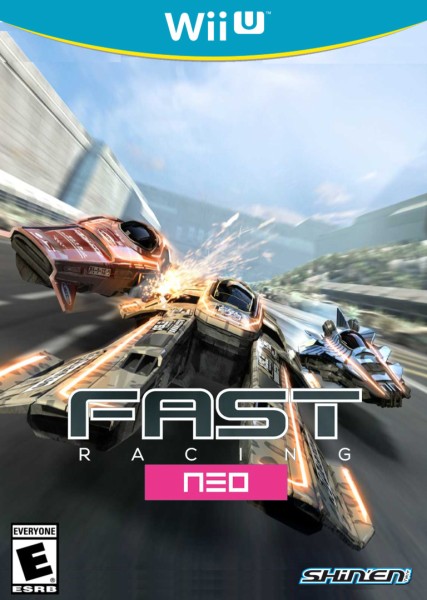
Fast Racing Neo – pardon me, FAST Racing NEO – is a little less joyful, but it is a game designed for anyone who kind of misses the days when we got Wipeouts and F-Zeros and Extreme-Gs and similar futuristic hovercraft racers.

OK, I will admit that it is very unlikely that anyone misses Extreme-G.  I’m not sure, even, whether it’s more properly spelled Xtreme-G and I don’t care enough to look it up.  But I digress.

Unlike Wipeout, FAST Ra… I can’t do that any more.  I have more self-respect and regard for the rules of capitalization.  Let’s start over.

Unlike Wipeout, Fast Racing Neo is not a weapon-based racer, and you have limited ability to influence other vehicles on the track.  Rather, your goal is just to beat 9 other hovercraft to the finish line on a variety of very cool science-fictiony tracks, generally by getting crushed by your opponents until you have memorized where every boost pad and hazard are so you can hit one and not the other, because WOW this features some vicious AI.

One of the issues with racing games is that, at their heart, they are games where the computer chooses to let you win.  Sure, player skill is important, but an AI-controller racer programmed to drive perfectly will do just that.  There has to be some degree of slop in their design, some code that says “actually, you should occasionally miss a boost pad or fail to make a turn”, and Fast Racing Neo does not have a lot of slop, even on the beginner difficulty.  If you are tooling along in a comfortable second-or-third-place spot, with your eyes on the leader and ready to make your push for first, and accidentally hit one of the many obstacles on the track, you are almost certain to be in 10th place by the time you finish respawning, with a bitter road ahead if you want to even make it into the top half of the pack.

I got thoroughly trounced by the very first set of races, several times in fact, and it was enough that I wound up quitting out and glaring at the game icon on the WiiU dashboard, very tempted to just delete the thing and forget about it… and then I decided that I was not going to be beaten and launched it again.

At the end, when I’d finally beaten all of the races and unlocked the next difficulty level, I felt wonderfully accomplished and decided that it was a good place to stop.  I’m a masochist, but only to a point.

Anyway, that brings the days of the WiiU to a close for me, and it can go to a comfortable storage box in the closet until I get the urge to play through Fatal Frame or TMS#FE again.  Unless those get ported to Switch.  Hopefully they will get ported to Switch. 🙂


Posted in videogames, WiiU | Leave a comment

On Wii Ennui

I’ve been playing through the last bits of my Wii and WiiU backlog recently, in preparation for freeing up another HDMI input, and it’s been an experience that has really made me think about the last few console generations and why it’s difficult for me to decide how I feel about this pair of systems.

The Wii, in particular, is a weird system because it was a phenomenal commercial success, sold a ton of software – nearly a billion units – and then spawned the WiiU, a system that was arguably dead after its first holiday season.

There’s not even any single massive flub that you can point at to explain the crash.  If you look at historical flops like the Saturn or the Xbox One’s first couple of years, you can point at the “we’re going to launch five months before we said we were and piss off our retail chains” or “what we think people really want from a games console is Fantasy Football League and not being able to resell games”, and there’s not a ton of debate there.  The Wii was a success until it wasn’t, and I can’t believe that it was just because it was a fad, like Cabbage Patch Dolls or Pogs.

The theory I’ve come to is that the Wii Remote was brilliant, but a bit of an evolutionary dead end, and this is where I spend a couple of paragraphs defining that by defining the inverse.

Before I bought my first console – a Sega Genesis – I’d been exclusively a computer gamer, and computers used one-or-two-button joysticks where you generally controlled movement with the right hand and pushed buttons with the left.  This was a control scheme inherited from the arcade machines, so it was natural, and moving from that to my first gamepad was a little weird – now you were moving with the left hand and pushing buttons with the right.

Once I’d gotten the hang of the three-button Genesis controller, however, it was a natural progression to the six-button Genesis controller, and then to the Saturn pad, and then the Saturn 3D controller which became the Dreamcast controller which became the Xbox controller, then the Xbox 360 controller, and finally the Xbox One controller which is my new Gold Standard for input devices.

Likewise, you can trace an evolution from the SNES pad to the Playstation controller and all of its subsequent iterations.

If you’re still with me, then you’ve probably gotten where I’m going with this.  The Wii Remote took a small bit of its DNA from earlier Nintendo controllers – the Nunchuck attachment is essentially the middle prong of an N64 controller, and the Remote could be held as a NES pad – but the real draw were the motion and pointer controls, and so much of the Wii’s library didn’t work very well with the control schemes that developers came up with for them.

I like horror games, so let’s take “Calling” as an example because it’s about as far as you can get from the Wii Sports / Just Dance / Carnival Games stereotype of Wii games. It also sold approximately five copies, so I’ll forgive you if you haven’t played it.

Calling was one of a bunch of Wii games that tried to make up for the lack of a second analog for camera control by having the player point the remote at the screen and point near the edges of the screen to change the view.  This works great, as long as your TV is located well in relation to the player – if the TV is above a median viewing angle, you are constantly holding the remote up, which is a fantastic way to wear your arms out in a surprisingly short period.  It also made frequent use of both the “-” and “1” buttons – take a moment, here, to look at a Wii Remote and speculate on how you are supposed to comfortably press these while keeping the pointer aimed at the screen –  AND had a mechanic where you would occasionally be jumped by ghosts and need to flail the Remote about to shake them off.

When people make fun of “waggle” controls, “shake the remote to break free” is exhibit A.

I eventually found a position that sort of made this work, but it involved me sitting on the couch, with one leg tucked up and a pillow resting on my knee, and controlling the camera by swinging my knee left or right.

Needless to say, I didn’t stick it out for very long.  Maybe it will get remastered someday.

Fragile Dreams, the next Wii game I tried to play, kept the same camera controls and added an element of “sweep the remote over the screen until the cursor changes to let you know there’s something there you can zoom in on.” which, well…  at least it doesn’t have shake-to-escape, but I’m still going to be waiting for a remaster.  Weirder things have happened.

By contrast, games like Pandora’s Tower made brilliant use of the remote – to the point where, even though it offered a traditional dual-analog control scheme if you had a Classic Controller, the remote was the preferred way to play.  Exergames were also perfectly suited to the remotes – one of the last games I have left in my Wii backlog is We Cheer, and working up a sweat by swinging virtual pom-poms around is both a joyful experience and something that couldn’t possibly be done if I was trying to hold on to a Dualshock.

My wife is not allowed to watch me playing We Cheer, as an aside.  There are some things no other human should see.  It’s bad enough that I occasionally catch two of our cats staring at me in rapt attention.

Here’s the issue, though, and I swear I’ve been getting around to this the whole time.  Even if you were absolutely in love with motion controls, and even if you found the pieces of software that were designed around them and used them intelligently… it still didn’t prepare you for any other console, and certainly not for a console where you had to split your attention between two screens while manipulating a dual-analog setup and occasionally poking at or blowing on the thing you were holding.

I find myself wondering what would have happened if, instead of doubling down and introducing the Wii Motion Plus, Nintendo had started packing the Classic Controller into the base Wii set around 2010 and mandating – or at least strongly recommending – developer support for both control schemes.  The Wii balloon would still have shrunken quite a bit – I don’t think there’s any way around that – but I don’t think it would have collapsed with such finality.

Anyway, enough of that.  I have gotten my Wii backlog down to the point where all I need to do is an awful lot of virtual cheering, and I’m pretty happy to have gotten to this point.

Posted in videogames, Wii | 2 Comments

Thanos Quote

About a month ago, I mentioned that I’d pulled a copy of Destiny out of a bargain bin for rather less than the price of a cup of coffee* and that it had been good for a solid 15 hours of running around and playing Insert Bullet A into Alien Menace B.

* Coffee is ridiculously expensive these days.

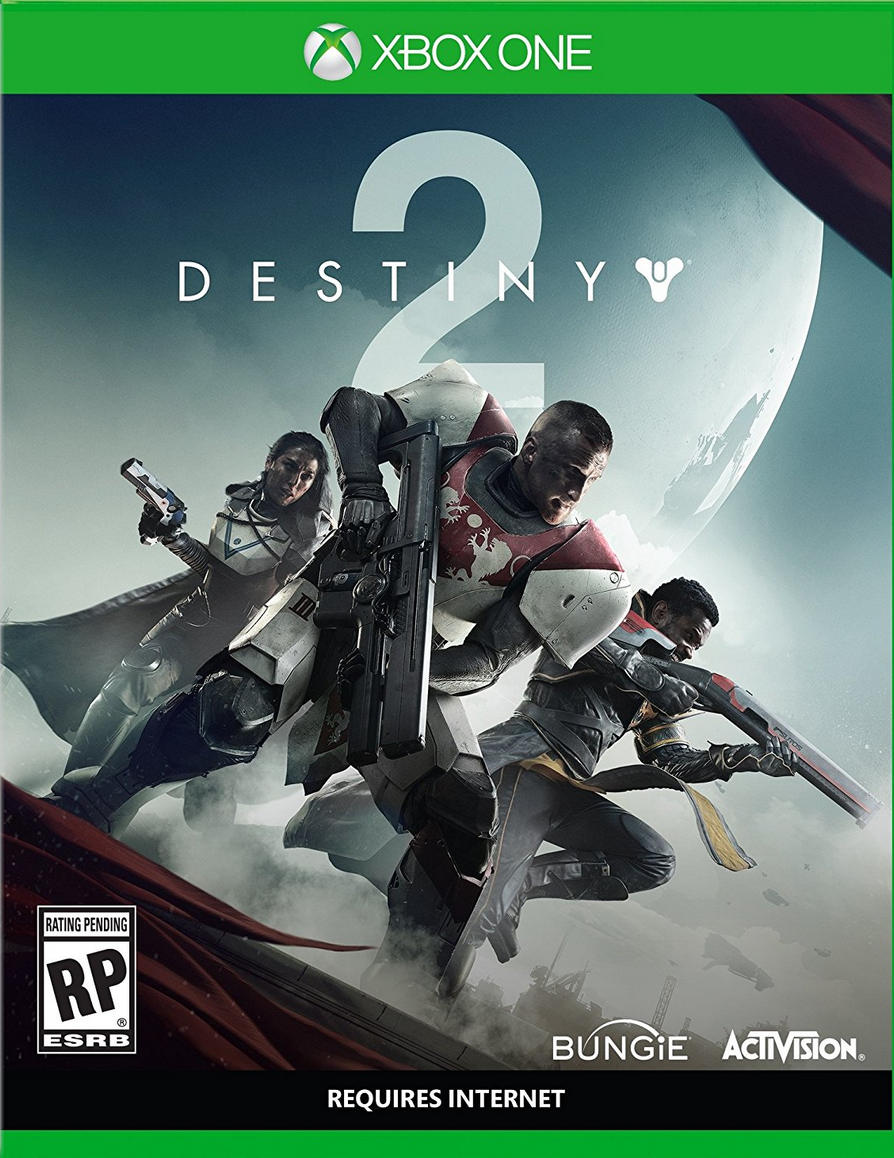
You would think that my next step would be to try out the expansions for Destiny, but they are only available in a $60 package that very rarely goes on sale, if Storeparser.com is to be believed.  That struck me as a bit much.

On the other hand, the Destiny 2 + Expansion Pass bundle showed up in the Big Xbox Live Sale for a hair under twenty bucks, or roughly four cups of coffee if we’re going to stick with a caffeine-based currency system, and that seemed like a fair price.

Now, one of my few complaints about the original game was that the story was, well, thin.  Really thin.  Butter, too much bread, blah blah.  There were a few cut-scenes, and an awful lot of exposition from your floating companion, but nothing about it was all that memorable.

I say that because it’s been a month and I can’t remember a dang thing about the story except that there’s a mysterious robot chick who shows up about halfway through the plot to tell you that you’re super dumb, and then shows up again at the end to give you a gun and disappear.  I imagine mysterious robot chick probably shows up again in the expansions, but I didn’t buy those.  She doesn’t show up at all in the sequel, so I guess she wasn’t that critical to the plot.

Destiny 2, however, has a pretty solid single-player campaign, and it’s mandatory to play through before you can start participating in most of the side activities of the game.  Having the expansion pass meant that I also got a pair of 2-3 hour story expansions, so I had plenty to do after the initial set of credits rolled – and, actually, I had quite a bit to do before I could participate in the expansions, because I had to get my gear level up to the recommended level for them and that took a lot of running around and grinding for purples.

All-in-all, I clocked in twice as many hours with Destiny 2 as with the original, and that’s pretty good value for money.  I didn’t KEEP playing after finishing the expansion stories, however, because I looked up what one does at endgame in Destiny 2 and it turns out that you do a lot of group content in hopes of slowly raising your gear level so you can tackle tougher events to raise your gear level even more.

There’s nothing particularly wrong with that, mind you – that pretty much describes every MMO, after all – but there is a particular facet of Destiny 2’s design that makes the process of making your numbers bigger feel rather meaningless.  That is to say, if your gear level is below the gear level recommended for an encounter you will both do less damage and take more damage, but if your gear level is ABOVE the recommended level it really doesn’t confer any benefits…

…in other words, there’s no way to enjoy one of the best things about MMOs, which is going back to low level zones and kicking the pixelated crap out of the stuff that terrorized you as a newbie with a guild tunic and a Rusty Short Sword.

Anyway.  I stopped playing at that point, but that’s just me.  If you want a game that lets you shoot alien dudes and monsters until the numbers flying out of the impact points stop and loot goes flying, Destiny 2 will give you that in spades and I recommend it.

Actually, I’ll go a step farther.  Destiny 2 features a mildly-insane AI named “Failsafe”, and she is possibly my favorite video game character ever.  So, I recommend everyone play Destiny 2 at least until you can go through the Failsafe missions.  You can stop after that, if you like.


Posted in videogames, Xbox One | 2 Comments

I’ve been stabbing mans wrong.

So, after a few years of being very mad at Ubisoft for the ending of Assassin’s Creed III, this year has been the year when I’ve been catching up on the series.

Recently, I’ve been playing Assassin’s Creed Rogue, the fourth and final game in the “Americas” trilogy, and I have a lot of positive thoughts about it.  I’m still not fond of the modern-day elements being relegated to running around a software development company, but the main character is surprisingly likeable and the bulk of the game is spent with him sailing around Canada and New York and stabbing a lot of people who deserve stabbing.

Granted, I’ve also stabbed quite a few people whose only crime was going for a stroll and stopping directly in front of an innocuous hay cart.  I am starting to think that the real reason this series has never had a full-on modern-day entry is that, unless you want to set the whole damn thing in Amish Pennsylvania, you are unlikely to have hay carts just hanging around.

But I digress.

Rogue was the game released to have something on shelves for the PS3 and Xbox 360 when most people had moved on to the current-generation systems, so I think it gets overlooked at times.  It did eventually get a remaster, and of course the PC version can be bumped up to quite reasonable graphics settings (I am getting a steady 60fps at 4k with all of the bells and whistles turned on, even on a 980GTX), so it hasn’t been entirely condemned to the last-generation ghetto, and this is a good thing.  The concept of playing an Assassin who has made an enemy of all of the other assassins makes for some really good times – it turns out that having people jump out at YOU from innocuous hay carts is even more fun than lying in wait in them.  Seriously.  It’s so fun, even if I did get brutally murdered a few times before I learned to be more careful around hiding places.

Anyway, while I have positive thoughts about the game in general, I wanted to mention one thing that has been making it even more of a joy, because it’s something that I have been doing wrong for the better part of a decade.

Here’s a screenshot from the game with my current settings.

And here’s the game at default settings:

I’ve probably put two or three hundred hours, over the last decade, into different flavors of Ubisoft’s slightly-homicidal historical tourism, and I don’t want to think how much of that has been spent staring at the corners of the screen.  It turns out that turning 75% of the game’s HUD off makes it a far better experience, because I’m actually paying attention to the middle of the screen.

This probably isn’t a new discovery for most people, but it’s a real – pardon the expression – game-changer for me.

The only complaint I have about this particular entry in the series is that the world is a little TOO distracting. I’m trying to be good and stick to the main story, but every time I bring up the world map it is covered with towers to climb and forts to take over and random buildings in need of urban renewal and just so many things that put a smile on my face when I’m doing them, even if I’ve done them a hundred times over in different Assassins Creed games before.  There is a real temptation to turn this into a 40 or 50 hour marathon, and that would probably be a bad idea.

Posted in PC Gaming, videogames | 2 Comments

My Consoles Are Spying On Me, And That’s OK.

I’ve spent the last few days replaying the first Mass Effect game, and was going to blather on for a bit about how this has been the Year of Replaying Games.  It would have been a thrilling post, trust me.

Then, I got a pair of emails that made me put that on the back burner, because they’re the sort of emails that would have gotten me thoroughly spun up when I was younger and reading a little too much slashdot.

So, a little back story.

Saturday evening, we entertained a couple of friends.  I used the occasion as an excuse to buy Mario Kart, so we played that for a bit, and one of them also wanted to see Horizon Zero Dawn since they had just recently gotten a PS4 for the purpose of playing Nier: Automata, finished that, and wanted some game suggestions.  So that got an hour or so in the PS4, long enough for him to get through the Young Aloy sequence anyway.

This morning, my inbox lights up with the aforementioned emails: one from Nintendo offering me a Mario Kart wallpaper and links to a strategy guide and a second, from Sony, offering me tips for getting started in Horizon Zero Dawn.

I guarantee you that there was a point in my life when I would have flown completely off the handle about how this was a breach of privacy and how dare they monitor what I’m playing and there may have been just a touch of frothing at the mouth.  I’m older and more mellow now, and this actually seems kind of neat.  I don’t actually NEED Horizon tips, but I’ll take a free wallpaper because what the heck.

As an aside, this is only the second time I’ve bought a game from the Mario Kart series.  The first was Mario Kart 64, and I think it got played all of once before it got popped out of the N64 so I could try F-Zero X and then never got put back in because why would anyone play Mario Kart 64 when F-Zero X is an option?

Looking back at the price of N64 games, I made a lot of fairly dumb purchasing decisions. I was young and working in the tech industry and was going to hit the IPO Jackpot Any Day Now.

Narrator Voice: He Didn’t Hit The IPO Jackpot.

Anyway, it turns out that the franchise has come a long way since the mid 90s.  For one thing, you can play as an Inkling Girl on a red scooter, and I will admit that this is the the reason I was looking for an excuse to buy it in the first place.  It’s also ridiculously pretty and I’m honestly blown away by the imaginative nature of the racetracks.  Furthermore, the steering and acceleration assists make it the perfect “I have company” game, because at that point all you really need to explain is that pressing L will fire items and then you are set for hours of good-natured rivalry.  By “good-natured rivalry”, of course, I mean that things were said that we will probably need to take back later, once we’ve all had a little distance and time.

I must also admit, VERY begrudgingly, that I see a small bit of value in Nintendo’s approach to generational iterations of software.  Mario Kart came out a year ago and was itself an ever-so-slightly updated version of the WiiU game from 2014.  It’s still full price, and normally I’d consider that ridiculous.

It’s still a little ridiculous, BUT…

Nintendo has never released two Mario Kart iterations on the same console, so it’s very unlikely that a “Mario Kart 9” will come out next month to make me regret this purchase, and a lack of different versions means that there will always be a new influx of opponents to play online against.  I’m still not fond of their attitude towards discounts, but I will give them a little credit in this case.


Posted in Switch, videogames | 2 Comments

On Social Media

One of the earliest comic book stories I can remember from my youth is a two-part story in “Superboy and the Legion of Super-Heroes”, which was one of the first series that I read after graduating from the Harvey comics that are all I was allowed as a very small lad.

Hang with me, I’ll get to the point eventually.

Anyway, the gist of it is that the Legion are targeted by a “League of Super-Assassins”, who have certain grievances with the Greatest Heroes of the 30th Century, and issue 253 is all about the Super-Assassins coming to kill legionnaires and being very successful at it, to the point where issue 254 opens with most of the legion in coffins.  The task of saving the day, then, falls to a murderously-insane Braniac 5 and the Legion of Substitute Heroes, a sort of side-group to the regular Legion who weren’t quite powerful enough to make the cut.

I will point out, here, that one of the active Legionnaires was Matter-Eater Lad, whose power was the ability to eat anything.  That is a pretty low bar to step over, and the subs were the heroes who somehow managed to trip.  Color Kid, for example, had the power to change the color of anything into any other color.

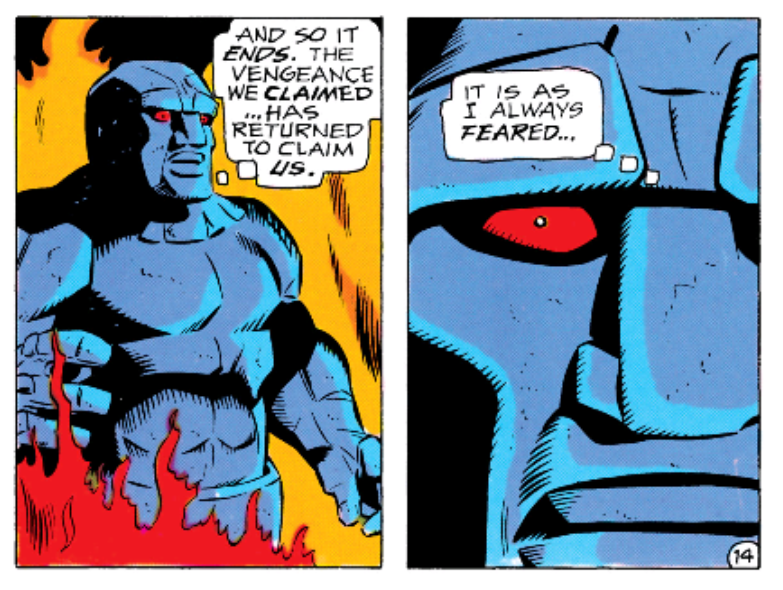
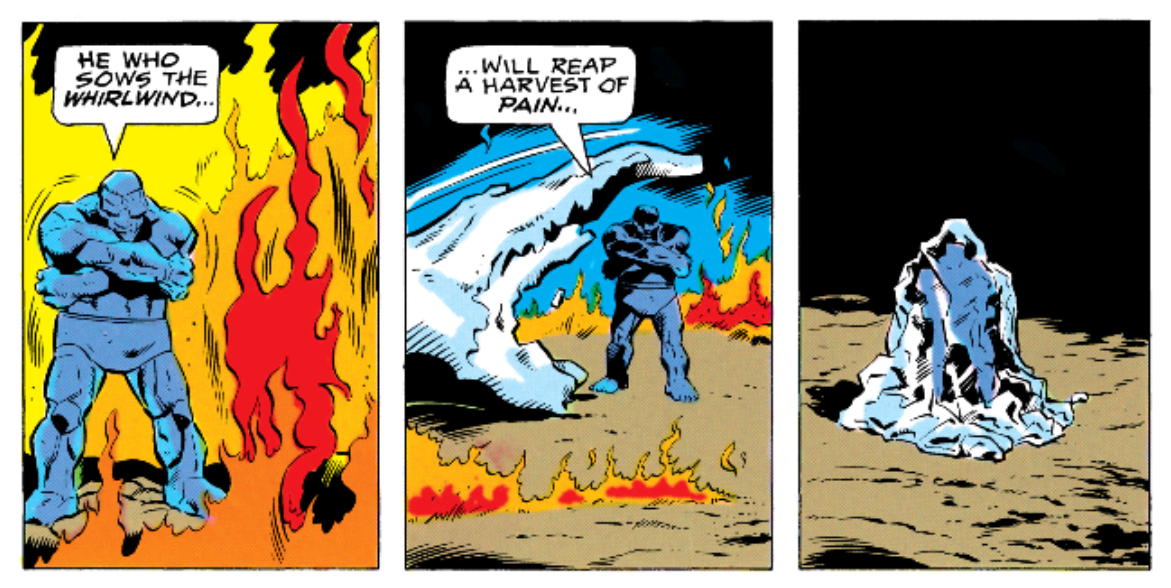
Anyway, since there was an issue 255, I assume it no longer counts as a spoiler to say that Brainiac and the subs managed to win the day.  None of this is particularly relevant except to lead up to the part of the comic that has been stuck in my head for four decades, where the last standing Super-Assassin realizes that they have lost, and that they brought it on themselves by poking the wrong anthill.

For some reason, reading my twitter feed recently has reminded me a lot of poor Blok, here.  I think I need to just unfollow everything except for pictures of cats and sugar gliders.


Posted in comics | Leave a comment

Mining the discount bin

So, I spent a solid month earlier this year playing through every Halo game, reading Halo books, watching Halo movies, eating Halo cereal out of a Halo bowl with a Halo spoon… It was an experiment in getting caught up with 17 years of Deep Halo Lore, and I am still surprised by how much of the game’s story happens completely outside of the games but is mandatory if you want to have any sort of understanding of what is going on in them.

It had the side effect of making me wonder what Bungie had been up to, and that lead me to wanting to pick up a copy of Destiny, a game I knew almost nothing about.  That is to say, I had a vague understanding that there was a game called Destiny, and that it was sort of an MMO but Bungie really didn’t want to call it an MMO, and I sort of remembered drama around loot caves, but really it was just one of those games that came out in 2013-2014 when I wasn’t paying much attention to the state of the industry because the state of the industry was depressing.

We did get Dark Souls II out of those two years, I guess, and a new Oneechanbara and a couple of good Miku rhythm games.  And the Tomb Raider reboot, come to think of it.

Oh, and Sakura Spirit came out in 2014.  It wasn’t a particularly good game, even by the standards of “Are visual novels games?” but there’s an argument to be made that a mildly-pervy visual novel getting on to Steam and then blowing the heck up was one of the most impactful things to happen to Steam ever.

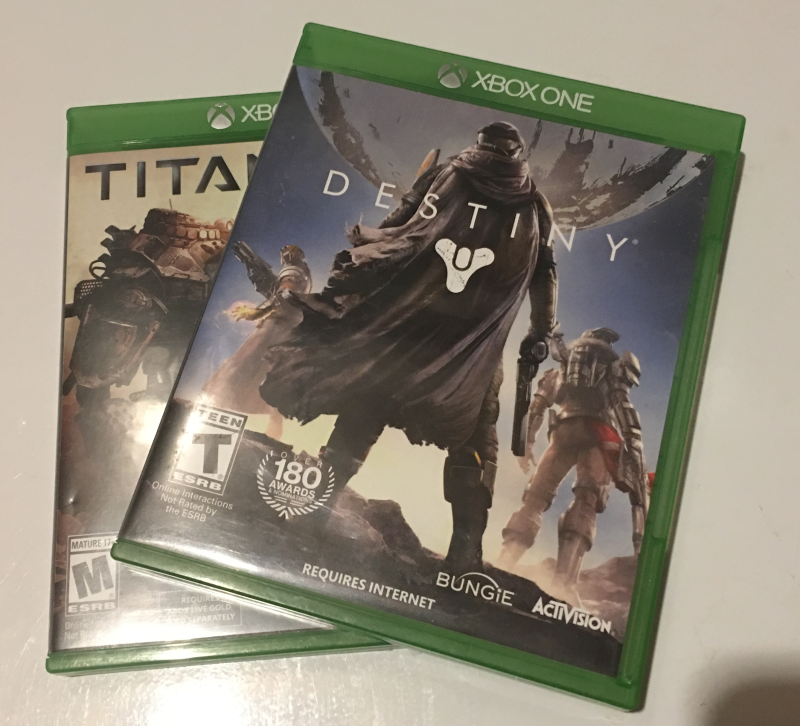
Anyway, back to Destiny.  I’ve mentioned that I am trying not to buy physical games these days, but it turns out that there is no way to buy Destiny digitally without buying “Destiny: The Collection”, which is sixty bucks.

Copies of “Destiny” on disc, on the other hand, are widely available from Gamestop for $2.50, so I broke my no-physical-games rule just this once.

OK, twice.  Titanfall was also $2.50.  I had played it for a bit on PC back in 2015, but I figured I might get $2.50 of fun from it.

Now, both of these games are online-only affairs, years old, and replaced by their sequels, so I expected them to be absolute graveyards.  The clerk at Gamestop even pointed this out while I was buying them, which I thought was a surprising bit of honesty.

You will imagine my shock when I booted up Destiny, got through the introductory mission, and got dumped into the game’s hub to find it full of other players running around – and not just max-level players, either!  I’m not sure what it looked like in the game’s heyday, but the impression I got was that there are a startling number of people still playing the vanilla game.

The sense of life continued when I left the hub and went out into the game’s mission areas, where I just kept running in to people.  I even got several group invitations, most of which I politely declined.

On the other hand, when you get an invitation from someone with a gamer tag like this… how can you say no?

Mr. R3ap3r and I wound up going through several of the game’s story missions together, and I must recommend the experience of playing Destiny with at least one other person.  It makes the frequent “you’re locked in a room.  Survive waves of enemies for a while until we open the door to the next room” encounters much more pleasant.

I played for about 15 hours, finishing all of the story missions and doing side content, and that is a lot of fun to get for $2.50 from a bargain bin.  There’s not much TO the story – I get the impression that the expansions fleshed it out a lot – but it ends with your character having saved the day and everyone says nice things about you for a little while.

I also put in Titanfall for a bit, again expecting the title screen to be replaced with a picture of a tumbleweed rolling across an Arizona desert.  I said a lot of nice things about Titanfall three years ago, so I won’t repeat them, but it’s still one of the best-feeling shooters out there, with the transition between ridiculously-agile pilot mode and deeply-satisfying stompy robot mode being just so… analog, and chunky, and I just don’t have good words for it.  They should have sent a poet, I guess.

Anyway, Titanfall is a little less-lively than Destiny, but there were still a couple hundred people playing the game’s “Attrition” mode (Look, guys, just call it Team Death Match, we know you want to), and getting into a match took less than a minute of watching the “finding game” wheel spin.

I should also mention at this point that my normal play hours are from 1 AM to 4 AM US Pacific coast time since I work a very odd shift, and that is the worst possible time to find opponents in any online game.

There were, however, no newbies here.  I was dropped into a game as the sole level one in a sea of level 50s – and, moreover, level 50s who had gone through the 1 to 50 grind several times over and had exciting prestige emblems next to their names.

My first match started with me loading in just in time to see “Victory!’ flash across my screen, and my second match went unexpectedly well – we won again and I actually had a positive K/D ratio.

My third match, well… the game says I only died 15 times in the course of the match, but I think it may be being charitable and may not have counted all of them to spare my feelings.

At that point, I was sitting at a 2-1 career record and figured I’d gotten my $2.50 worth and would just play through Titanfall 2’s single player campaign again if I wanted more giant stompy robot action.

So, that was five bucks to find out what Bungie has been up to when they’re not making Halo games and to get used like a chew toy by Titanfall veterans.  Well worth it.


Posted in videogames, Xbox One | 2 Comments

On Interactivity

I probably spend more time than I should thinking about how video game controls work, but I spent a fair amount of time over the last couple of years playing through 3d games from the early 2000s, and that was a very interesting time for control schemes.  Developers were figuring out how to best make use of all of the inputs available to them to create a system for navigating 3d spaces, without a ton of existing examples, and playing older games is often eye-opening in realizing where standards came from.

It has also made me really appreciate the the fact that we HAVE more-or-less standard controls these days.  The biggest thing I usually need to figure out is whether “jump” is on the A button, as God intended, or whether it’s been put on Y for no logical or defensible reason.

I’m not talking about controls today, however, but rather objects and interactivity.

One of the side effects of the increased realism in virtual environments during the early 2000s and continuing to today is that game levels tend to have an awful lot of stuff in them that isn’t related to progressing through the game, and sorting out important stuff from scenery can be tricky.  I have rather painful memories of being stuck in Silent Hill 2 for ages because I couldn’t tell that one blob of pixels on a shelf was the key item I needed to get to the next section of the apartment complex, as an example.

One recent way that developers have been avoiding this is through Detective Sense / Witcher Sense / CroftVision(tm), where you spend a good percentage of your play time dropping in and out of a wireframe representation of your surroundings looking for brightly glowing things.  This is pretty convenient and makes it hard to get stuck, so that’s a win, but it’s awfully easy to spend so much time in Make Important Stuff Glow mode that you start treating it as the default view.  The best implementation of this is probably Horizon Zero Dawn, where it’s justified by the main character finding a computerized earpiece / AR gadget that is always scanning the area and showing her things that only she can see.

It’s probably a good thing that Aloy grew up as an exile, as an aside, because it likely saved her from being burned as a witch for seeing visions.  Also she’s almost certainly the only literate person in the entire Nora tribe, come to think of it – I don’t remember seeing any writing beyond vague iconography.  I’m really off topic here. Moving on.

Another way that seems fairly popular is the technique where almost any item you can pick up is represented by a brightly glowing ball or has a neon arrow pointing to it.  This is used heavily in the Souls games, which have generally very dark environments where things can easily hide in corners, but also came up in Xenoblade Chronicles 2, which helpfully highlights harvesting nodes from quite a distance away and uses them to draw you towards paths and occasional ambushes.  This makes for less immersion, to be sure, but does solve the problem of needing to constantly click the make-important-things-glow button.

Some games still revel in visual clutter and expecting the player to make sense of it all, of course.  Skyrim, for example, goes for filling its environments with tons of random things and expects the player to figure out which of them are important to the player.  It works out because Skyrim doesn’t really have completely useless items – if you want to fill your bags with cheese wheels, there are cheese wheels on a shelf somewhere to steal and there’s really no reason to make every wheel of cheese glow so the player knows that he can steal the cheese.

Skyrim did break down for me when I hit the Dwemer ruins, since Dwemer stuff doesn’t look like regular, mundane objects.  It took me ages to figure out that the things I was mistaking for random decorations were actually chests, and I had to do a lot of backtracking to find all of the loot that I’d walked by.  It did kind of lend itself to the concept that these ruins were almost completely alien places, so that’s actually an argument in favor of some visual confusion where indicated.

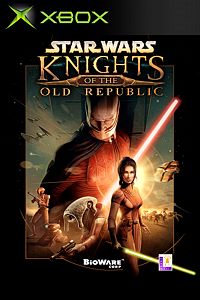
Anyway.  The reason this has been on my mind is that my wife and I recently started playing through Knights of the Old Republic, which came out in 2003 and which is a really interesting beast when it comes to standardized controls and object interaction. It’s a bit of an evolutionary step as far as the control scheme goes – it uses both analog sticks for movement and camera control, but combat and other controls are all on the face buttons.  The triggers, where you’d expect combat controls on a modern game, are used to cycle through all actionable items in your immediate vicinity, at which point you can press the A button to walk over to it.  It can be a little dizzying to watch – the instinct upon entering a new room is to flick the right trigger a few times, which spins the camera around as your character immediately faces everything important – but is a really quick way to figure out  everything you can loot, hit, or talk to, and doesn’t break immersion.

Anyway.  It’s a small thing, but I’m a big fan of it.  Obviously it didn’t catch on as a control scheme – probably because of the camera issues – but it’s surprisingly good for a game of its vintage.

Posted in videogames, xbox | 3 Comments

In Which, I Explain My Absence And Rant About A JRPG.

So, my daily viewer counts have dipped consistently into the double digits of late, which is normal when I don’t post for nearly a month.  For the handful of people who do read this blog on the regular, I’d like to apologize and offer the feeble explanation that my employer decided to go from having 1100 employees locally to having 150 employees locally, moving the ones that were left to Work-From-Home status so they can sell the building, and replacing our departing team members with new hires, in a different city, who we are responsible for training and supporting.

So, even being part of the lucky 150, it has been a bit of a stressful time.

I also haven’t had my normal posting habit of “finish a game, write up a quick summary of what I liked about it, add three pictures hastily sourced from GIS, call it a good day” because I’ve been playing pretty much the same game all month and it took far too long to finish.

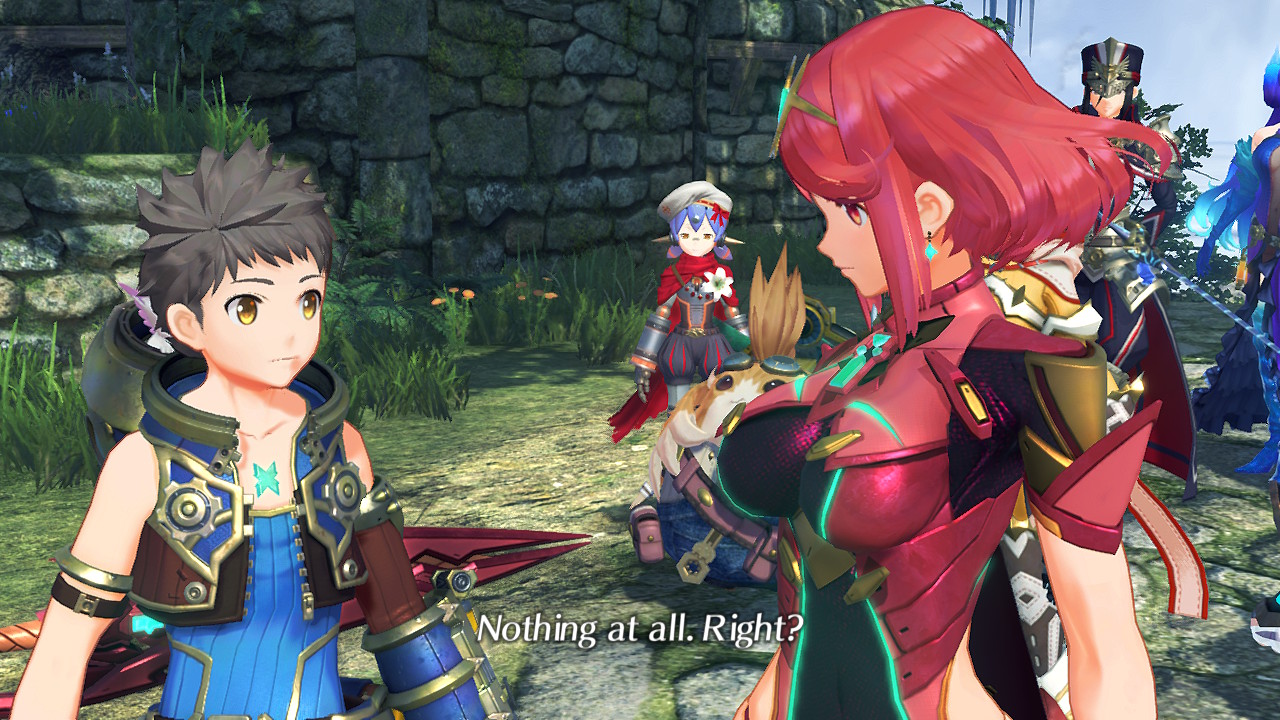
So, since I promised you an explanation AND a JRPG rant, let’s talk about Xenoblade Chronicles 2: The Touching Love Story Of A Young Lad And His Sword Who Is Also A Girl With Massive Hooters.

Which has nothing to do with why I bought the game.

If Pyra is not to your liking, however, rest assured that Nintendo/Monolith spent a good deal of money hiring famous character designers to bring a bevy of top-tier waifus to suit every taste, then hid most of them behind a gacha mechanic with drop rates that would have people foaming at the mouth if they charged actual money for the loot boxes.

Fortunately, they are all acquired through in-game methods, so the only thing you need to spend to build up your collection is the precious heartbeats separating you from your inevitable demise.

It also has a tiger in a nightcap.

Which, honestly, goes a long way towards justifying the existence of the game.

I got a lot of enjoyment out of Xenoblade Chronicles 2, but it’s a difficult game for me to recommend.  It took me a little over 77 hours to get from opening to end credits, and it would have taken a lot longer if I hadn’t, at roughly the 40 hour mark, decided that I was going to abandon any pretext of “gamer cred” and drop the difficulty setting so fights would stop taking forever to play out.

That’s a ridiculous amount of time to put in on a game, and that’s with trying to focus on the main story quest and ignoring almost every side quest NPC.  I spent some time trying to come up with lists of stuff I could have accomplished in 77 hours, but I realized quickly that trying to make lists about that was an even poorer use of time than spending it playing a long JRPG.

A good deal of that time was spend on filling out the skill trees for your assorted living weapon companions, because they don’t always fill out organically through normal play.  Rather, at some point you’ll realize that the reason a particular sword has been stuck at level 2 of a skill trait for hours is that you need to go back to a low level zone and find five of a specific monster to kill before you can proceed, but those specific monsters only show up at a certain time of day and never if it’s snowing.  Or that a spear wants to eat its favorite dessert – just roll with me, here – but it won’t tell you what that dessert is so you have to go through all sixty dessert items in your inventory until you’ve stuffed the poor thing so full of tarts that it’s ready to explode.

I’m not trying to imply, here, that this game was designed to sell you the strategy guide.  I am saying it outright.  It is therefore a little unfortunate that the strategy guide was only released in Japan, so keep the wiki bookmark handy.

It also has a ridiculous number of game systems to keep track of, with my favorite what-the-hell being the Economic Health system.  Basically, your travels take you through several countries, and the items in shops and quests you are offered depend on how wealthy the country is.  There are huge swathes of content blocked out until you spend millions of gold in the regional stores.  It’s not my place to judge, but I think they could have simplified this particular system away without hurting anything.

I had a few technical issues, as well.  The visuals are gorgeous – barring a fair amount of texture load-in – as long as you’re in TV mode.  In portable mode, well… I tried to avoid major story moments in portable mode, because the game does not play well like that.  It’s blurry and drops frames like mad.  It’s better than the Switch version of Nights of Azure 2, at least, which is just a visual nightmare no matter what mode you’re in.  It also has separate volume sliders for most audio channels (voices, narration, environmental sounds and music, that sort of thing) and I didn’t realize that turning down the one labeled “Cutscene Voice Volume” affected ALL cutscene audio (voice, music, sound effects) until after I’d finished the game and was going back to play around with the Event Viewer.  As a result, my attempt to tone down some of the frequent character chatter meant that I spent most of the game with the Big Epic Moments being practically silent.  I seriously did not understand why this was getting such universal praise for its soundtrack, and while I’ll accept some blame for that I still think this could have been labeled better.

AND YET.  I’ve spent this entire article complaining about Xenoblade Chronicles 2, but somehow it held on to me for an entire month and had me up until 5 in the morning getting through the last push to the final boss and the end credits.  The world, characters, and story kept me going through all of the technical issues and over-complicated game systems, and that’s pretty high praise.

So, what I’m saying here is that this is definitely a game for anyone who likes cute girls, painfully sincere shonen protagonists, and huge game worlds with enough to do to keep you busy for a year.  Just don’t be afraid to look up things online if you get stuck, and play docked if you can manage it.


Posted in Switch, videogames | 3 Comments

I played some Dark Souls.

It was OK.

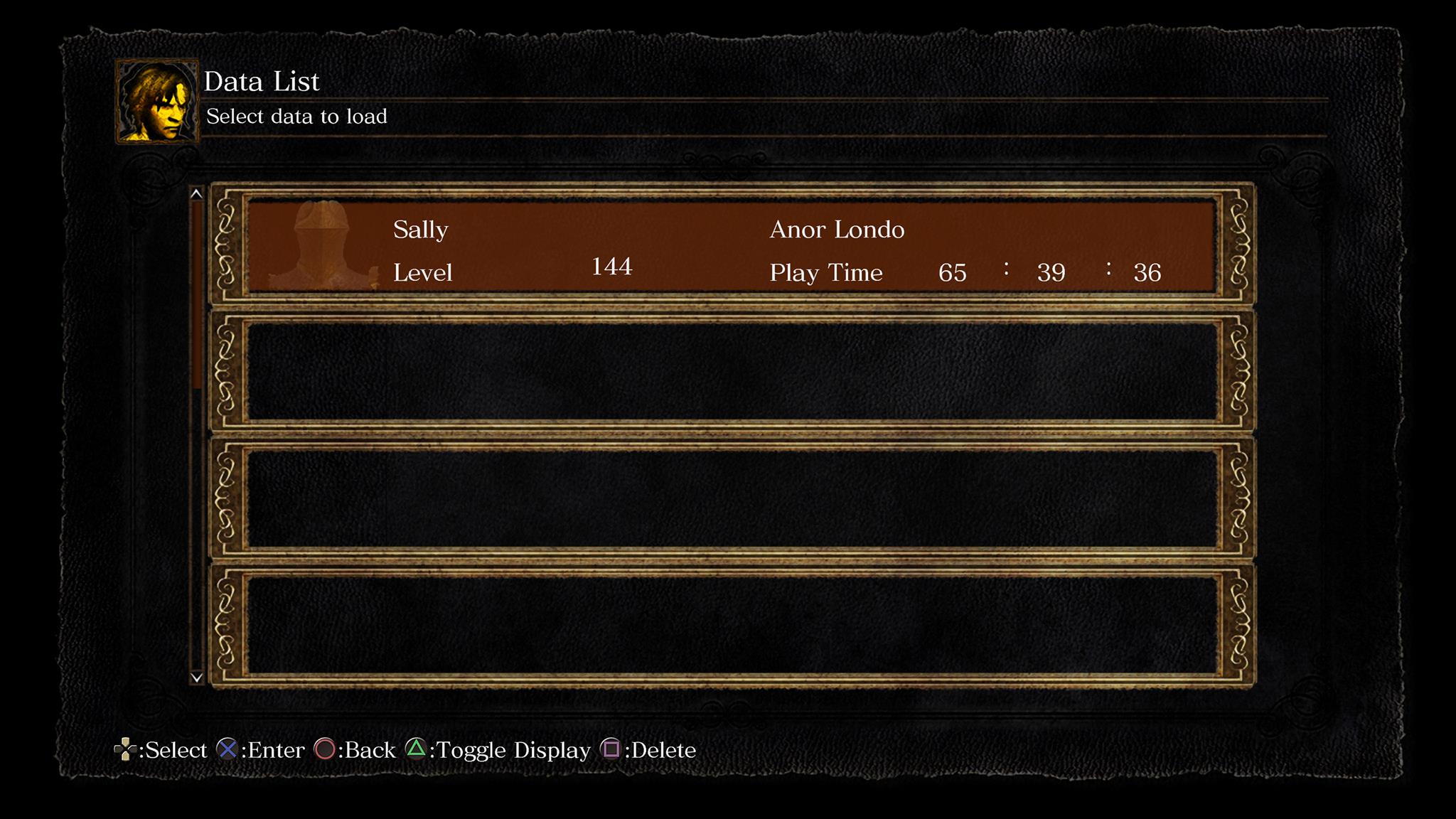
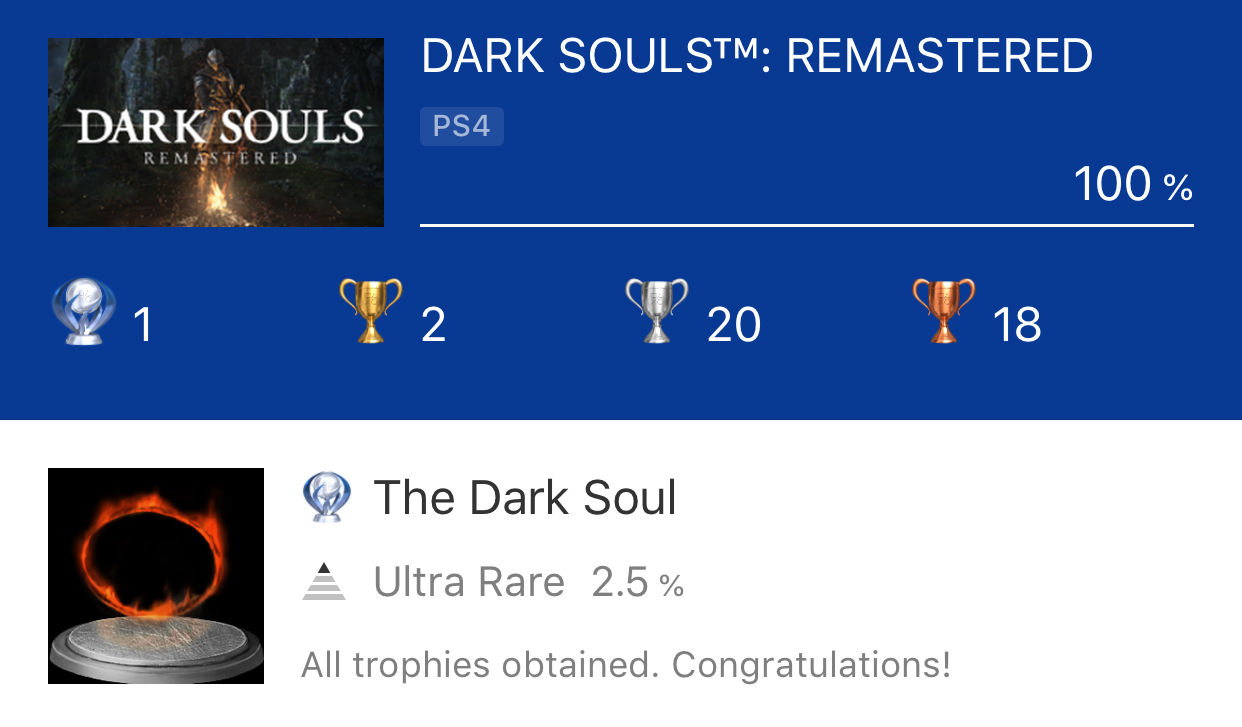
I didn’t start the Dark Souls remaster intending to go all cheevo-mad, but the problem was that the very first Channeler – the one in Undead Parish – decided to drop the Channeler’s Trident.  It was kind of a sign that I was destined to collect every last rare weapon.

On a COMPLETELY unrelated note, I have some pretty unkind thoughts about Seath’s tendency to always be turning in the precise direction he needs to turn to have his tail clipping through the walls of his arena.  Completely unrelated.

When I played through Dark Souls on the PC, it had been out for several years and the online was being particularly glitchy, so I did absolutely no jolly co-operation.  I also tended to be really short on humanity, so I almost never took advantage of any of the NPC summons.  I did it The Hard Way, and I feel good about having done that.

Once.

This time through, I did a lot more co-op, and it was a good time.  I particularly enjoyed hanging out at the Centipede Demon and making sure that the host got the lava-walking ring. We didn’t always win, but it was a good feeling to know that the guy was going to have a much easier time on his next attempt.

I even put up with PC invaders for most of my first play-through, and I have to say that I can’t recommend the experience.  The last straw was being backstabbed, from the front mind you, by someone who was – on my screen, at least – well outside the reach of the massive 2-handed sword I was trying to flatten him with.  After that, I set the game into Offline mode, only switching back online when I was actually standing at a fog gate.

The older versions of Dark Souls didn’t have the ability to play offline without actually disconnecting from the internet, so if you needed justification to buy the remaster, I’d say that’s a pretty good one.

Griping about gankers aside, it’s still just about the perfect remaster of one of the best games I’ve played in the last… well, ever.  Now we just need… ah, never mind, I won’t even bother saying it. 🙂


Posted in PS4, Souls, videogames | 1 Comment