
Little bit of a brain dump today, based on notes I took while in Japan recently. It’s become a much more convenient place to visit, as long as you’re like me and live every minute of your waking life tied to a smart phone.
First, getting around.
Google maps worked great for walking and transit directions. I kind of wonder whether it’s put the “Navitime” guy out of a job. I didn’t see any of their ads on the Yamanote line this trip, anyway. I’ll miss that helmeted goofball.
Walking directions DID take me down some extremely narrow alleys at times, however. In most countries I would be very wary of these directions, but it’s Japan. The odds of getting mugged are …not zero, but very very close to zero.
I am, however, a big bald bearded dude and recognize that I have a somewhat privileged viewpoint.
When not walking, I am a massive fan of Japan’s transit systems and the way that you can typically use a combo of trains and busses to get to almost anywhere you would ever want to go. Stations typically have excellent bilingual signage, though I’d strongly recommend being able to recognize the kanji for N/W/S/E (北/西/南/東) and Entrance/Exit (口/出).
Full disclosure: There was at least one occasion where I didn’t realize the bilingual signs had stopped until my wife pointed it out, though, so I may be a little biased here.
In addition, being able to add a Suica to Apple Wallet made paying for trains and busses extremely convenient, as long as your phone is always close to hand. For those cursed with clothes without pockets, a physical Suica in a train pass case is likely going to be a much better idea.
However, if you’re on vacation or just worn out after a long day of exploring, getting a taxi may be a much better idea. Apparently there are Japan-specific taxi hailing applications, but we did very well with Uber. Unlike the US, Uber doesn’t call you a random guy in their personal car – instead, they hook into the taxi services so you get a licensed driver and you pay via the app. It worked very well almost every time we used it, though there were two exceptions that I feel I should note:
First, it didn’t work at all in Numazu. Unsurprisingly, it seems to be limited to bigger cities.
Second, trying to get a taxi after 10 PM may not be possible. My theory is that taxis after 10 PM in Japan tend to double their rates, and Uber doesn’t allow this. I discovered this at a very bad time and had to walk a little over a mile at a very fast pace to barely catch the last train of the night back to Kyoto station.
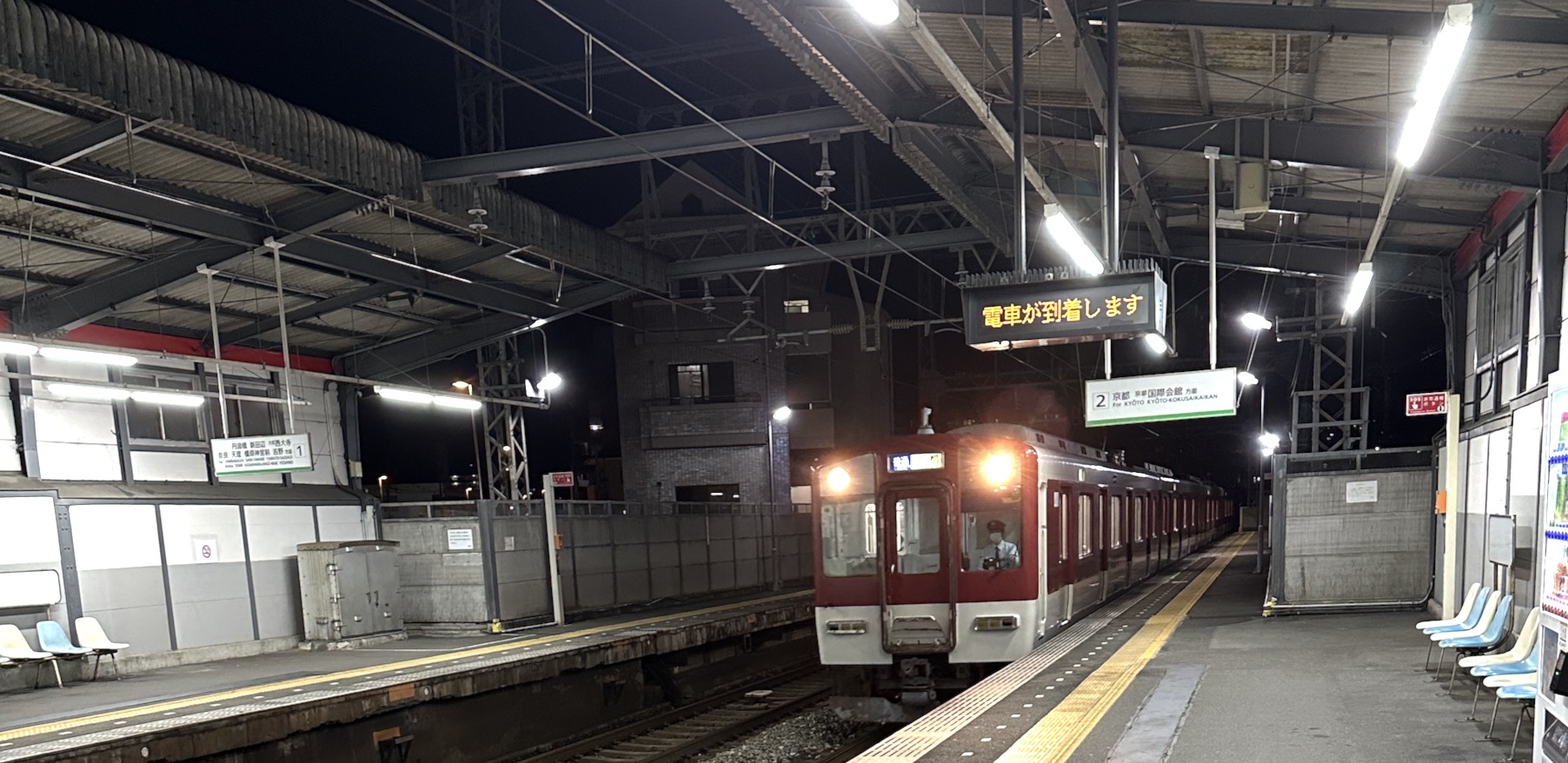
My savior.
Even without the app, it wasn’t too hard to get a taxi at most hotels and train stations. There’s usually a place to stand that is clearly marked as a taxi queue, and you can get in line for one. It’s much better than my experiences in places where “who gets the taxi” is a matter of who wants it most.
On the topic of Suica, I strongly recommend using Suica pay almost anywhere you can, since you can top up the card on your phone and use it rather than winding up with pockets full of change. I normally come back from Japan with a double handful of 1-and-5-yen coins, but this trip I spent with mostly light pockets and a minimum of jingling. You can either say “Suica de” to the cashier, or just open the wallet app with the Suica card on display and show it to them. They need to push a button on the register, after which you tap the phone to the reader, wait for two beeps and collect your purchases.
Apple Pay is a little less universal and it doesn’t seem like they’ve managed to make their brand an everyday word in Japan. “Touch”, on the other hand, is recognized and usually “touch de” would get a look of recognition and a helpful point to the appropriate pad on the payment terminal to use.
As an aside, that’s “de” pronounced “day” and is a particle that you can use where you’d use “by” as in “touch de” = “pay by touch” or “taxi de” = “go by taxi”. It’s a terribly useful tiny bit of Japanese.
DO, HOWEVER, CARRY CASH. I had to come to the rescue of a table full of Australians at a very small cafe in Kyoto who had scrounged through everyone’s pockets and purses and still come up short for their bill.
While taxis and trains were great for the humans, we didn’t really want to manhandle our luggage around, so this was the first time I had taken advantage of luggage delivery services. I fell thoroughly in love with them. Basically there’s a counter at the airport where you take your bags, give them your hotel information and a reasonable amount of money, there’s a little paperwork, and they then make your bags disappear and show up at the front desk of wherever you’re going.
The Hotel Granvia in Kyoto deserves an extra bit of recognition here because the staff asked where we would like our bags delivered on our departure as part of the check-in process. When we were ready to head out to our next destination, we were very happy to find that all of the paperwork had already been done for us.
The only weird part, for me, was that they needed the full address of the hotel rather than the hotel name and city. This actually made sending bags from Haneda airport TO the Hotel Granvia a little tricky, since their whole deal is basically “we’re in the train station in Kyoto” and it took a little googling to find a street address that the delivery service could get their system to accept.
The other thing that commonly gets recommended when traveling to Japan is a pocket Wifi router, and this is one place I’m going to diverge from the common wisdom. We got one and it was extremely meh, getting poor reception and needing frequent charging. It may just have been a bad unit. T-mobile sells an 1-month international data package for fifty bucks and I had a better experience with that.
Something that is probably less advice for other people and more admitting that I’m a bit of an idiot, make use of tax free shopping where possible. You’ll mostly see signs for this in touristy areas, advertising that you can buy things without the 10% consumption tax as long as you’re spending at least Y5000 and have a passport.
I’ve used these a couple of times on previous trips and the experience was miserable. Lots of paperwork and at the time you had to go to a counter at the airport to actually get the money given to you as a refund on what you’d already spent.
This trip, I actually waved this off the first couple of times it was offered to me, which turned out to be a mistake. It’s much easier now and you get the tax removed right there at the register. Most of the times they just scanned my passport, but one time they asked me to scan a QR code on my phone and go to a web site and click a button.
Also apparently the tax refund has been issued at the store itself for at least a decade, so this isn’t new at all. My brain has been retaining some seriously ancient information that has probably cost me quite a bit in taxes that I didn’t technically need to pay.
Oh, and shipping stuff home was also easier. I’ve done this plenty of times in the past and it’s always been a bit annoying to get the appropriate forms filled out. This time, they just handed me a tablet and pushed the “English” button for me so I could fill out the address information, package contents, and values. You’ll want to have a list of everything in the box before you go to the post office, however.
You can buy EMS boxes at the post office itself but you’ll want to go to a Y100 store for a roll of packing tape.
OK. That’s all my random Japan travel tips in one post. To sum it up: getting around Japan is just super convenient for foreigners now, and places where there used to be just a little bit of friction have been smoothed over by the advances of technology.

