
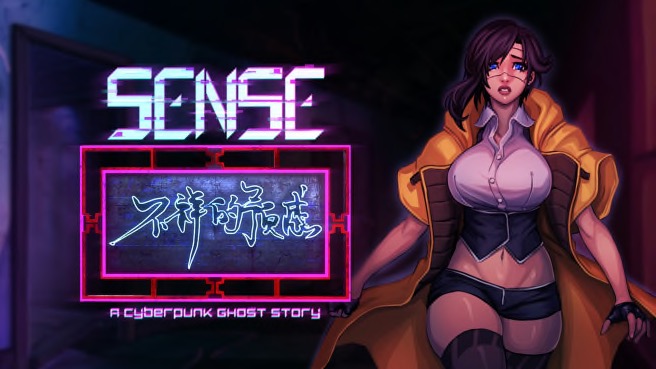
It has been a very – VERY – long time since I have played a traditional adventure game, the kind where you wander through some sort of fantastical setting picking up every loose object you can find and trying to apply them to puzzles that make sense only in the game designer’s twisted logic.
To be honest, the last one I played may have come on floppy disks.
I’ve played a ton of “Hidden Object Puzzle Adventure” games in the intervening years, of course, but those tend to be very friendly and point out which locations still have stuff to find and where you might be able to use the latest thing you’ve just collected. Many of them also have fast travel to avoid annoying backtracking.
Sense is not as nice about this. It’s not as obviously-designed to sell hint books as the Sierra adventure games of yore, but there is an awful lot of needing to slowly walk back and forth, going into rooms you’ve already seen a ton of times, to find exactly the right spot to use the thing you’ve just picked up or to find the thing that you have walked past a dozen times that your character has finally realized is worth collecting.
So why’s it worth playing, then?
Well, apart from the blatant pandering to baser instincts displayed by the main character, it’s a really atmospheric horror game set in the sort of cyberpunk future that we used to envision 40 years ago. Well, sorta. Your character LIVES in 2083, but 90% of the game takes place in a haunted apartment complex that was sealed up in 1983 after things went horribly wrong. Your only glimpses of 2083 come at the very start and end of the game, and in one tiny segment where you actually go outside to get between wings of the building.

I would not want to live in this 2083, but I’ve always associated the cyberpunk genre as “tech + decay” and this particular version of Future Seattle is beautifully realized for that aesthetic.
So, with a virtual setting of 1983, the tech inside the apartments themselves is… well, sparse and extremely analog.

Saving is done by finding betamax tapes and then betamax VCRs where you can record your progress, for example. This is Survival Horror for Gen X Nerds.
With most of the game taking place in a very run-down and falling-apart 1983 apartment complex, I could understand some serious disappointment if you read the game’s title and expected to be jacking in to cyberspace and pulling off some William Gibson hijinks. In fact, the main character is just trying to meet someone for a first date – hence the flimsy justification for the dressed-to-kill outfit – and has to go into the bathroom to calm her nerves while she waits for her date to show up. When she comes out, everything has gone all to heck and suddenly she has a whole lot of ghosts to deal with while trying to escape the apartments she’s become mysteriously stuck in.
Some of these ghosts are simply mischievous – I loved the one that would steal items from your inventory and, ahem, spirit them away to its lair – some are actually friendly and some are downright malevolent. Your mission, should you choose to accept it, is to find a way to lay them all to rest. Each purification comes with a little comic-panel-style cutscene, and some of them are quite emotional.
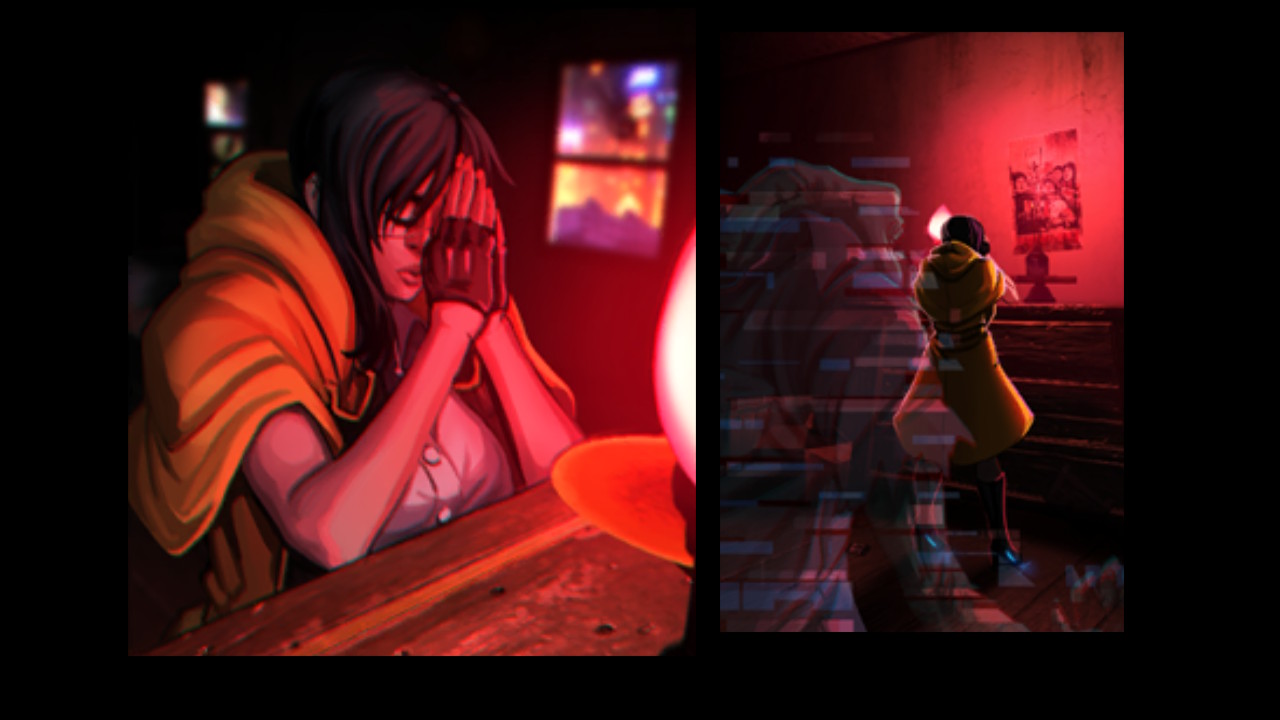
The developer cites Fatal Frame as an inspiration, and while there’s no camera-related combat it definitely has some of the same feeling of wandering through the aftermath of Something Bad Happened and trying to piece it together from environmental clues. There’s a lot of examining items and journal reading in your future.
It also has a related easter egg that gave me a huge grin when I examined a camera I found in one of the rooms.

I would also like to mention that the music and sound design are top notch. Those are a big part of making an effective horror game, and I felt this nailed both.
The actual experience of playing the game, as I kind of alluded to earlier, is… well, clunky. Setting the sometimes-obtuse puzzles aside, there’s a number of occasions where you can be doing things entirely out of sequence and the game does not adapt well.
For example, you don’t actually encounter many downright hostile ghosts until you’re about halfway through the game, and your character needs to learn how to exorcise them. Straightforward, right?
Except you can skip the bit where you learn how to perform exorcisms and then suddenly find yourself in a cutscene where you are sealing away a ghost like you finally remembered that Exorcism 201 course you took back in community college. I suppose it’s better than a painful death scene, but maybe locking the character out of the conflict until they’ve gone through the story justification to get there would have been better.
There’s also some combat, though it’s blissfully rare, which features you kind of vaguely waving this enchanted sword thing at ghosts and hoping the collision detection goes your way.
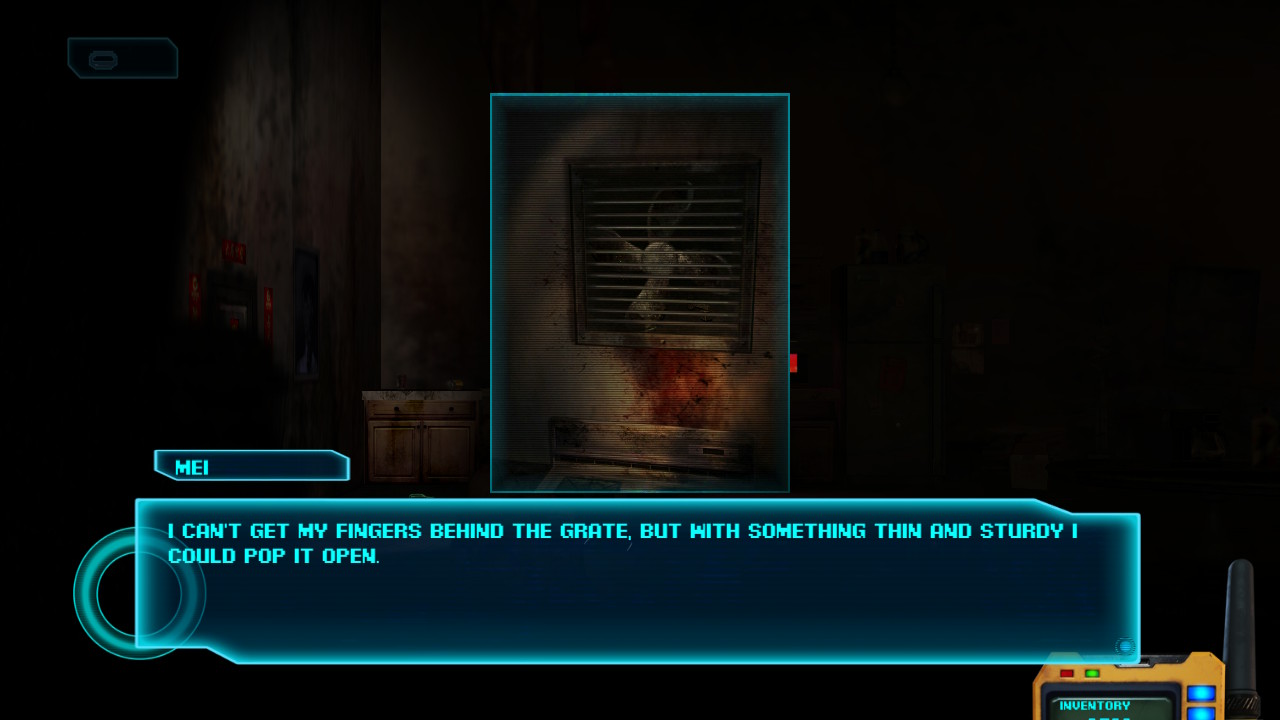
And, like every adventure game in history, it is plagued by Single Use Items. This grate, for example, is something you run into very late in the game. By this time you have used and thrown away a number of crowbars, knives, and screwdrivers, but when you get to this grate you now need to rummage around until you’ve found a letter opener to get into it.
The last negative thing I’m going to say is this: Sense is available for the Switch, Mac, Linux, Windows, Playstation and Xbox. If you have any choice at all, do not play it on the Switch like I did. For a game that doesn’t seem like it should be taxing the system all that much, it suffers some really obvious slowdown throughout. It was written by a three person team, and I stumbled across a Steam forum post from the developer apologizing for the Switch performance and saying they weren’t able to optimize it further, so at least they tried?
So, would I recommend this game?
Well, hmm. Yes. If you are able to get into the setting and atmosphere, you can probably forgive the clunkiness and slow pacing. There’s a demo version on Steam to check out, which should help seal the deal one way or the other.
 Baud Attitude
Pingback: Sense – A Cyberpunk Ghost Story – GAME HACKER 3